


The primary role of a fermentation medium is to meet the nutritional requirements of microorganisms. Carbon sources, nitrogen sources, mineral salts, and various growth factors provide the basic conditions required for microbial growth and metabolism. Adjusting these nutrients according to the microbial strain and fermentation objective remains one of the most common approaches to medium optimization.
In microbial product manufacturing, however, fermentation is not the end of the process.
For agricultural microbial products, even when a high viable cell count is achieved at the end of fermentation, the microorganisms still have to undergo storage, transportation, and downstream processing such as spray drying. Once applied in the field, their ability to colonize, form biofilms, and consistently exert plant growth-promoting or antimicrobial effects directly affects product performance. Fermentation for microbial metabolites presents a different situation. A high microbial biomass does not necessarily result in a high yield of the target product; the metabolic state of the cells during fermentation is equally important.
Traditionally, these challenges have been addressed mainly through strain selection, fermentation process optimization, and formulation technologies. Our application studies with green algae polysaccharides suggest that there may also be further room to explore the role of the fermentation medium itself.
Can a Fermentation Medium Do More Than Provide Nutrients?
Qingdao Seawin Biotech Group has long been engaged in the development of marine biological resources. Green algae polysaccharides were initially studied and applied mainly as plant biostimulants. In recent years, we have gradually extended their application to different microbial systems.
Our initial trials had a relatively straightforward objective: to determine whether green algae polysaccharides could improve the stability of agricultural microbial products. As the studies progressed, we observed other changes, including microbial tolerance to downstream processing, biofilm formation, functional metabolite production, and target product yields in engineered microbial strains. These observations led us to reconsider the role that green algae polysaccharides may play in fermentation systems.
Green algae polysaccharides are not a single-component medium ingredient. The green algae polysaccharides used by Seawin Biotech are derived from natural green algae. In addition to polysaccharides characterized by a high proportion of rhamnose, they also contain proteins, amino acids, fatty acids, and minerals such as calcium, magnesium, and zinc. The naturally complex composition of green algae extracts has also been widely reported in related studies.
After green algae polysaccharides are introduced into a fermentation system, the available sugars, proteins, and other nutrients can be utilized for microbial growth and metabolism, while some components that cannot be fully utilized by the microorganisms remain in the fermentation broth. At lower addition levels, their role is mainly associated with nutrient supply. As the addition level increases, more functional components remain in the broth, and these residual components may further contribute to cell protection and other functional processes.
This creates an important practical distinction. Conventional fermentation medium design mainly focuses on how nutrients support microbial growth and product formation. For green algae polysaccharides, however, both the fraction utilized by the microorganisms and the fraction remaining in the fermentation broth may provide different functional benefits.
The former participates in the fermentation process, while the latter remains with the fermentation broth through downstream processing and into the final product. In our current studies, different levels of improvement have been observed in microbial survival during storage, viable cell counts after spray drying, and microbial functional performance. In some engineered microbial systems, increasing the addition level of green algae polysaccharides also resulted in a clear increase in target product yield.
These observations cannot be attributed to a single mechanism. Nutritional supplementation may contribute to some of the effects, but it does not fully explain all the results observed so far. Whether green algae polysaccharides and their associated natural components are also involved in microbial cell protection, biofilm formation, or metabolic processes requires further investigation. At the same time, the utilization of these components may vary among microbial strains and under different fermentation conditions. The appropriate addition level therefore needs to be determined for each specific fermentation system.
Biostimulatory Fermentation Medium
Research on plant biostimulants has established a relatively clear understanding: their value does not primarily lie in the amount of nutrients they provide to plants, but in their effects on plant nutritional processes, physiological status, and adaptation to environmental conditions.
The results observed with green algae polysaccharides in microbial systems have given us a similar perspective.
If certain natural components in a fermentation medium can provide nutrients while also improving microbial status during fermentation, storage, and downstream processing, or influencing microbial functions and target metabolism, such a medium goes beyond the conventional role of nutrient supply.
Based on these observations, Seawin Biotech proposes the concept of “Biostimulatory Fermentation Medium.”
Our current understanding is that a Biostimulatory Fermentation Medium meets the basic nutritional requirements of microorganisms while incorporating natural functional components that may improve microbial physiological status, tolerance to environmental stress, or functional performance, and, under suitable conditions, promote target metabolism.
This concept is not intended to define a fixed medium formulation. Different microorganisms have different nutritional requirements, and green algae polysaccharides are unlikely to be the only functional components that can play such a role. Instead, it introduces an additional consideration into medium design that has received relatively limited attention in the past: what physiological and functional state do we want the microorganisms to be in at the end of fermentation?
For liquid microbial products, this may mean maintaining a high viable cell count after storage. For microbial powders, it may mean reducing cell loss during drying. For biocontrol and plant growth-promoting microorganisms, biofilm formation, colonization, and functional metabolism also need to be considered. For engineered microorganisms, the focus may shift more toward target product formation.
From this perspective, biomass, fermentation time, and substrate utilization remain important, but the evaluation of a fermentation medium can be extended further to include its impact on downstream processing and final product performance.
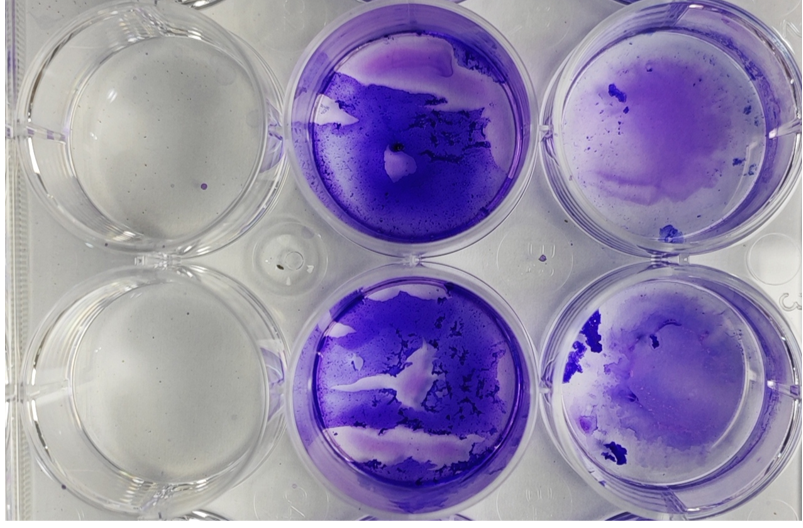
Seawin Biotech’s research in this area is still at the application exploration stage. Results observed so far include changes in viable cell counts after high-temperature storage, cell survival after spray drying, functional parameters such as biofilm formation and IAA production, as well as changes in target product yields in different engineered microbial systems. These findings indicate that green algae polysaccharides show effects in different fermentation systems that merit further investigation. Further studies are needed to distinguish which effects are associated with nutritional utilization and which may involve cell protection or metabolic processes.
In the next two articles, we will present these experimental results in more detail. The first will focus on agricultural microbial products, including storage stability, spray drying, and microbial functional performance. The second will examine the application of green algae polysaccharides in engineered microbial fermentation and target product production.



 RSS
RSS