


Crop diseases destroy an estimated 20–40% of global agricultural production every year. As resistance to chemical pesticides continues to increase, growers and input manufacturers are actively seeking sustainable alternatives that can both strengthen plant immunity and suppress pathogens.
Among the most promising innovations are green algae oligosaccharides—marine-derived molecules that combine plant immune activation with direct antimicrobial activity.
Developed from naturally occurring polysaccharides in green seaweeds such as Enteromorpha and Ulva, these bioactive compounds are emerging as a new generation of ingredients for:
- Biostimulants
- Biocontrol products
- Biofungicides
- Specialty fertilizers
- Sustainable crop protection programs
What Are Green Algae Oligosaccharides?
Green algae oligosaccharides are short-chain carbohydrate fragments with a degree of polymerization (DP) typically ranging from 2 to 20. They are produced by controlled enzymatic hydrolysis of green algae polysaccharides.
Unlike conventional oligosaccharides, these molecules possess highly diverse structures and natural sulfate modifications, giving them exceptional biological activity.
Key Structural Features
Diverse Molecular Backbone
Depending on the source algae, green algae oligosaccharides may include:
- α-1,3-rhamnose oligosaccharides
- β-1,4-mannose oligosaccharides
- Uronic acid–rich heteropolysaccharides
Abundant Functional Groups
These molecules naturally contain:
- Hydroxyl groups
- Carboxyl groups
- Sulfate ester groups
These functionalities contribute to:
- Strong water solubility
- High chemical reactivity
- Enhanced interaction with plant and microbial cells
Controlled Molecular Weight
Using targeted enzymatic technology, Seawin can precisely control molecular size and degree of polymerization to maximize biological efficacy.
How Green Algae Oligosaccharides Protect Crops
Green algae oligosaccharides work through a dual-action mechanism:
- Activation of plant immune responses
- Direct inhibition of plant pathogens
This combination makes them highly attractive for integrated disease management.
1. Plant Immunity Activation
Green algae oligosaccharides function as elicitors, which are recognized by plant receptors as warning signals.
Once detected, plants rapidly trigger a cascade of defense responses.
Early Immune Signals
- Calcium ion (Ca²⁺) burst
- Reactive oxygen species (ROS) production
- MAPK phosphorylation (MPK3, MPK6)
Defense Pathway Activation
Salicylic Acid (SA) Pathway
Stimulates PR proteins such as:
- PR1
- PR2 (β-1,3-glucanase)
This induces Systemic Acquired Resistance (SAR).
Jasmonic Acid (JA) and Ethylene (ET) Pathways
Enhances protection against:
- Necrotrophic fungi
- Chewing insects
Phenylpropanoid Pathway
Promotes:
- Lignin synthesis
- Cell wall strengthening
2. Direct Antimicrobial Activity
In addition to activating plant defenses, green algae oligosaccharides can directly suppress pathogens.
Mechanisms of Action
Membrane Disruption
Carboxylated oligosaccharides bind to microbial cell surfaces and alter membrane permeability.
Enzyme Inhibition
Sulfated structures may interfere with fungal chitin synthesis.
Quorum Sensing Interference
Specific molecular structures disrupt pathogen signaling and reduce virulence.
Laboratory Results Against Major Plant Diseases
Research with Enteromorpha-derived oligosaccharides has demonstrated strong inhibition against important fungal pathogens.
Wheat Fusarium Head Blight
Inhibition rate: up to 95.7%
Tomato Early Blight
Inhibition rate: up to 70.5%
These results highlight the significant potential of green algae oligosaccharides as active ingredients in biological crop protection.
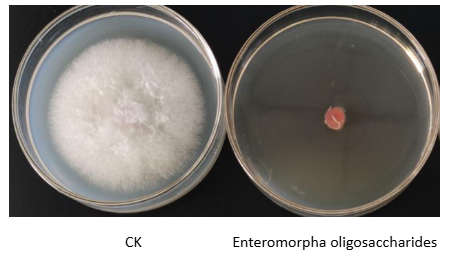
Figure 1 Inhibit Wheat Fusarium Head Blight
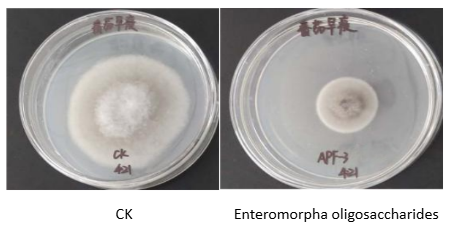
Figure 2 Inhibit Tomato Early Blight



 RSS
RSS