


How Structurally Modified Marine Oligosaccharides Combine Plant Immunity Activation and Direct Pathogen Suppression
As agriculture moves toward more sustainable crop protection strategies, growers and input manufacturers are facing a common challenge: how to reduce dependence on chemical pesticides without compromising disease control performance.
Green algae oligosaccharide derivatives offer a promising solution.
Derived from Enteromorpha (Ulva prolifera) and further enhanced through structural modification, these molecules combine two complementary functions:
Activation of plant immune responses
Direct suppression of fungal and bacterial pathogens
This dual-action mechanism allows them to deliver more stable and effective performance than conventional products that rely on a single mode of action.
In this article, we explore how green algae oligosaccharide derivatives support biocontrol and crop disease management, supported by field results in tea, citrus, and grape production.
What Are Green Algae Oligosaccharide Derivatives?
Green algae oligosaccharide derivatives are functional molecules obtained by controlled depolymerization and structural modification of polysaccharides extracted from marine green algae, especially Enteromorpha (Ulva prolifera).
Through targeted modifications such as sulfation, quaternization, and alkylation, these molecules can be designed to provide:
Stronger elicitation of plant immune responses
Direct antimicrobial activity
Improved foliar adhesion and retention
Enhanced rhizosphere interaction
Greater formulation flexibility
Unlike traditional elicitors or conventional fungicides, these molecules integrate multiple mechanisms into a single active ingredient.
How Green Algae Oligosaccharide Derivatives Work in Biocontrol
Green algae oligosaccharide derivatives support biological crop protection through two complementary mechanisms.
1. Activation of Plant Immunity
These molecules are recognized by plants as molecular signals, triggering defense pathways such as:
Salicylic acid (SA) pathway
Jasmonic acid (JA) pathway
Pathogenesis-related (PR) protein expression
Antioxidant enzyme activation
The result is enhanced systemic resistance and greater preparedness against pathogen infection.
2. Direct Pathogen Suppression
Certain functional groups confer direct antimicrobial properties by:
Disrupting microbial cell membranes
Interfering with metabolic processes
Inhibiting biofilm formation
Preventing spore germination
This combination of immune activation and direct antimicrobial activity forms the basis of their superior field performance.
Key Benefits in Crop Disease Management
Green algae oligosaccharide derivatives offer several practical advantages for growers and formulators.
Dual-Action Disease Control
Preventive immune priming
Curative pathogen suppression
Reduced Chemical Dependency
Lower pesticide usage
Improved performance of integrated programs
Improved Crop Health
Enhanced stress tolerance
Better yield and quality
Broad Application Potential
Compatible with foliar and soil applications
Suitable for multiple crops and diseases
Sustainable Biocontrol Solution
Marine-derived and environmentally friendly
Supports regenerative agriculture strategies
Field Applications of Green Algae Oligosaccharide Derivatives
Case 1: Tea Anthracnose Control
Active Molecule
Sulfated Enteromorpha Tetrasaccharide
Mode of Action
PR1 gene expression increased 8.2-fold within 24 hours
Systemic resistance lasted up to 14 days
Direct inhibition of zoospore germination (EC50 = 35 μg/mL)
Field Results
| Treatment | Control Efficiency | Chemical Reduction | Yield Increase |
|---|---|---|---|
| Conventional chemical program | 68.5% | – | +12.3% |
| Sulfated Enteromorpha Tetrasaccharide | 86.7% | 40% | +19.6% |
Key Takeaway
Better disease control, reduced chemical input, and increased tea yield.
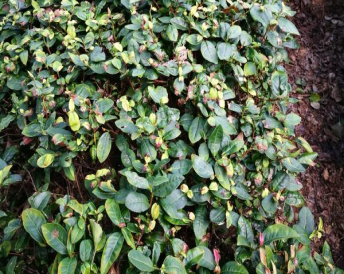
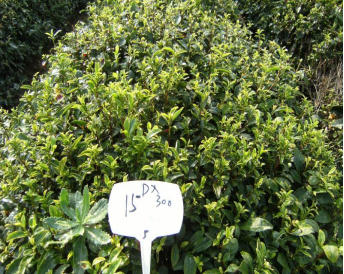
CK Oligosaccharide Treatment
Case 2: Citrus Canker Control
Target Disease
Citrus canker caused by Xanthomonas spp.
Active Molecule
Quaternized Rhamnooligosaccharides
Mode of Action
Positive charge (+32.5 mV) disrupts bacterial biofilms
Minimum inhibitory concentration (MIC) = 8 μg/mL
Activation of the jasmonic acid pathway
Promotion of wound healing through callus formation
Field Results
Disease reduction: 92.3%
Copper-based products: 76.8%
Mite incidence reduced by 67%
Copper treatment increased mites by 40%
Key Takeaway
Effective control of citrus canker without triggering secondary pest outbreaks.
Case 3: Grape Downy Mildew Control
Active Molecule
Sulfated-Alkylated Green Algae Oligosaccharides (SAM-AOS)
Mode of Action
C12 alkyl chains improve foliar adhesion and retention
Sulfate groups induce grape resistance genes
External protection plus internal immune activation
Field Results
| Parameter | Conventional Program | SAM-AOS | Improvement |
|---|---|---|---|
| Disease incidence | 28.7% | 6.3% | -78% |
| Sugar content | 18.2 °Brix | 20.5 °Brix | +12.6% |
| Spray frequency | 8 applications | 5 applications | -37.5% |
Key Takeaway
Lower disease pressure, improved fruit quality, and fewer spray applications.
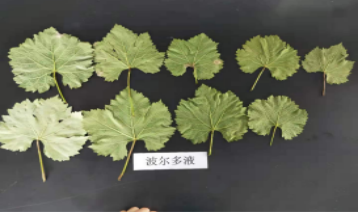
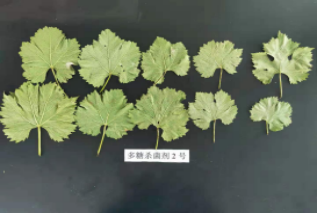
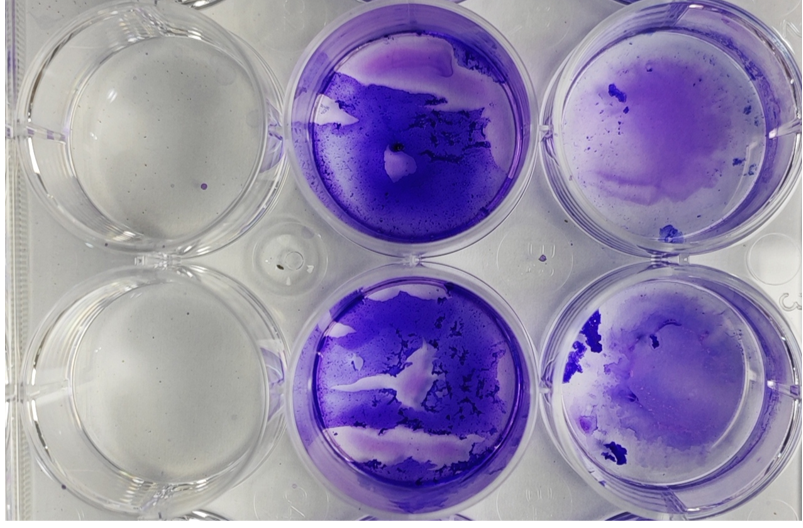
CK SAM-AOS
Why Green Algae Oligosaccharide Derivatives Deliver “1 + 1 > 2” Performance
The outstanding field performance of these molecules results from coordinated action across multiple stages, sites, and physiological responses.
1. Continuity Across Action Stages
From Preventive Activation to Targeted Elimination
Before infection, they act as immune elicitors to pre-activate systemic resistance.
After infection, antimicrobial components target pathogens through membrane disruption and metabolic interference.
2. Expansion of Action Sites
From Foliar Protection to Rhizosphere Interaction
When applied as a foliar spray, amphiphilic structures enhance spreading, adhesion, and retention on leaf surfaces.
When applied to soil, cationic structures interact electrostatically with microorganisms, colloids, and organic matter, improving retention and influencing the root-zone microenvironment.
3. Extension of Crop Responses
From Disease Control to Physiological Regulation
In addition to controlling diseases, these molecules can:
Improve drought tolerance
Enhance water retention
Reduce postharvest decay
Extend shelf life
Improve yield and quality
Frequently Asked Questions
What is biocontrol?
Biocontrol refers to the use of natural substances or organisms to suppress plant diseases and pests while reducing reliance on conventional chemical pesticides.
What are green algae oligosaccharide derivatives?
They are structurally modified molecules derived from marine green algae, particularly Enteromorpha (Ulva prolifera), designed to activate plant defenses and directly inhibit pathogens.
How do they differ from conventional elicitors?
Traditional elicitors mainly stimulate plant immunity. Green algae oligosaccharide derivatives combine immune activation with direct antimicrobial activity.
Which crops can benefit?
They have demonstrated effectiveness in tea, citrus, grape, and many other crops.
Which diseases can they help manage?
Examples include anthracnose, bacterial canker, downy mildew, and other fungal and bacterial diseases.
Can they be combined with pesticides?
Yes. They can be integrated into conventional or biological crop protection programs to enhance efficacy and reduce total chemical input.
Are they suitable for organic and sustainable agriculture?
Depending on formulation and certification, they are highly compatible with sustainable and regenerative farming strategies.
Technical Background of Qingdao Seawin Biotech Group
Qingdao Seawin Biotech Group (https://www.seawin-bio.com) has unique access to large-scale marine green algae resources, especially Enteromorpha (Ulva prolifera).
Combined with advanced extraction, depolymerization, and structural modification technologies, Seawin has developed a series of green algae oligosaccharide-based solutions for:
Biocontrol
Crop disease management
Abiotic stress resistance
Yield and quality improvement
With large-scale manufacturing capacity and strong R&D capabilities, Seawin supports partners worldwide with:
Active ingredients
Customized formulations
Technical documentation
Field application recommendations
Private label and OEM services
Conclusion
Green algae oligosaccharide derivatives represent a new generation of marine-derived molecules for biocontrol and crop disease management.
By integrating plant immunity activation, direct pathogen suppression, and crop physiological regulation, they provide a practical solution for reducing chemical dependency while improving disease control performance.
Field results in tea, citrus, and grape production demonstrate their ability to enhance efficacy, improve crop quality, and support more sustainable agricultural systems.
As formulation technologies and crop-specific solutions continue to evolve, these multifunctional molecules are expected to play an increasingly important role in the future of biological crop protection.
Contact Seawin for Samples and Technical Support
If you are looking for innovative marine-derived ingredients for biocontrol, sustainable crop protection, or customized formulation development, we would be pleased to support your evaluation.
Email: sales@coub.cn
Tel: +86-532-85901608
Website: https://www.seawin-bio.com
LinkedIn: https://www.linkedin.com/company/qingdao-seawin-biotech-group/
Facebook: https://www.facebook.com/profile.php?id=100064125487612



 RSS
RSS